 how-to
Is Microneedling Effective for Aging: A Clinical Guide
Table of Contents
- How Microneedling Works for Aging Skin
- Microneedling for Fine Lines and Wrinkles
- Microneedling Results Timeline: When to Expect Changes
- How Many Microneedling Sessions Are Needed
- Microneedling Benefits and Risks for Mature Skin
- Comparing Microneedling with Other Anti-Aging Treatments
- Is Microneedling Right for Your Aging Skin
- Frequently Asked Questions
Last Updated: October 10, 2026
How Microneedling Works for Aging Skin
Is microneedling effective for aging? Understanding whether is microneedling effective for aging depends on knowing how the treatment actually works at a skin level. Microneedling creates controlled micro-injuries that trigger your skin's natural repair response. This process stimulates collagen and elastin production, the two proteins responsible for skin firmness and elasticity. We use this mechanism to address age-related changes like fine lines, wrinkles, and loss of skin texture that develop over decades.
The technique itself is straightforward. A device with fine needles punctures the outer layers of skin at precise depths. Your body responds by flooding the area with healing compounds. This wound-healing response is what makes microneedling effective for aging skin, it's not the needles themselves doing the work, but your skin's biological response to them.
Collagen induction and the wound-healing response
When needles create micro-injuries, your skin activates a repair cascade. Fibroblasts (cells that produce collagen) spring into action. They lay down fresh collagen fibres to heal the "damage." This new collagen fills fine lines and thickens thinning skin. The process takes weeks, which is why results appear gradually rather than immediately.
Elastin production follows the same pattern. As your skin heals, elastin fibres rebuild, restoring the spring and firmness that fades with age. This is why microneedling for fine lines and wrinkles works, it's addressing the root cause (loss of collagen and elastin) rather than just masking the surface.
The depth of the needles matters. Shallow treatments (0.25-0.5mm) stimulate collagen mildly and suit sensitive skin. Deeper treatments (1.0-2.5mm) trigger stronger collagen induction and work better for deeper wrinkles and scars. Professional treatments typically go deeper than at-home devices, which is one reason they deliver stronger results.
What happens during a treatment session
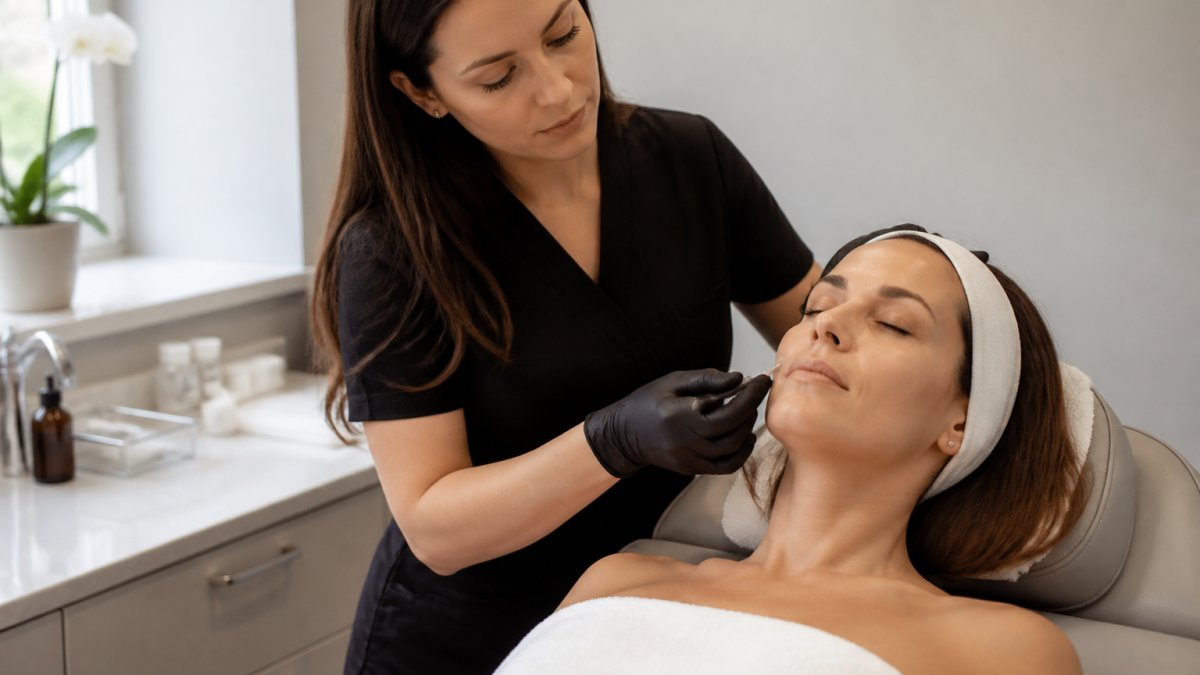
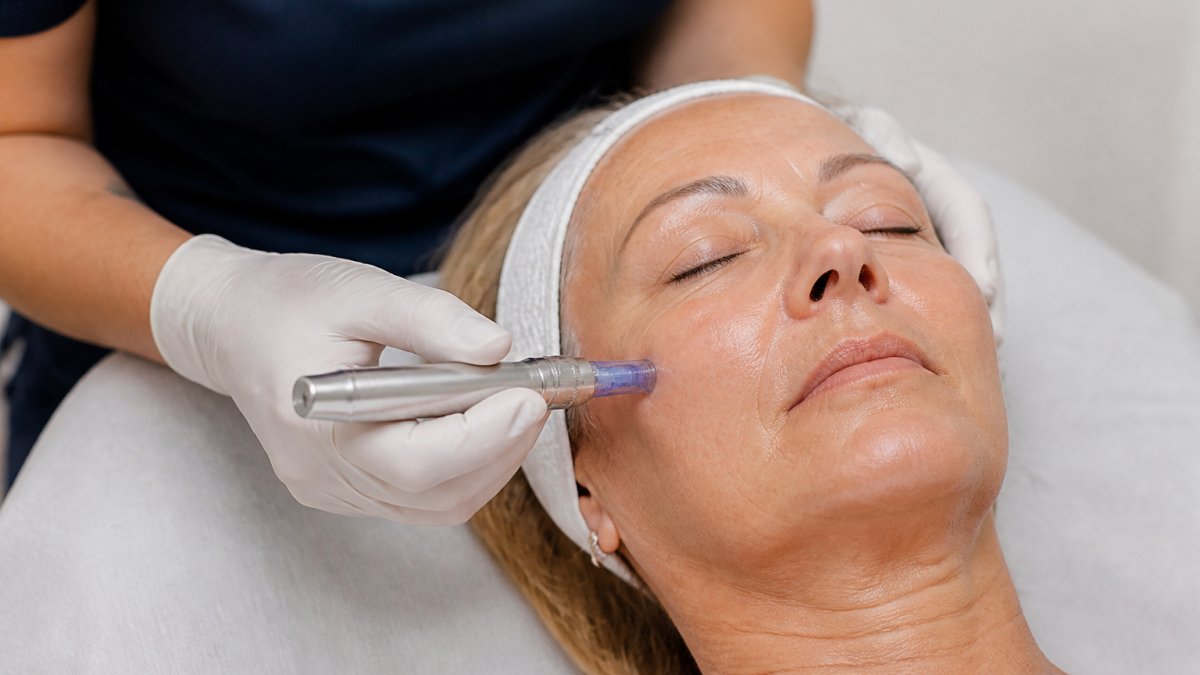
A professional microneedling session takes 30-45 minutes. Your practitioner applies numbing cream first, so you feel pressure but not pain. The microneedling pen glides across your face in controlled passes, creating thousands of micro-channels.
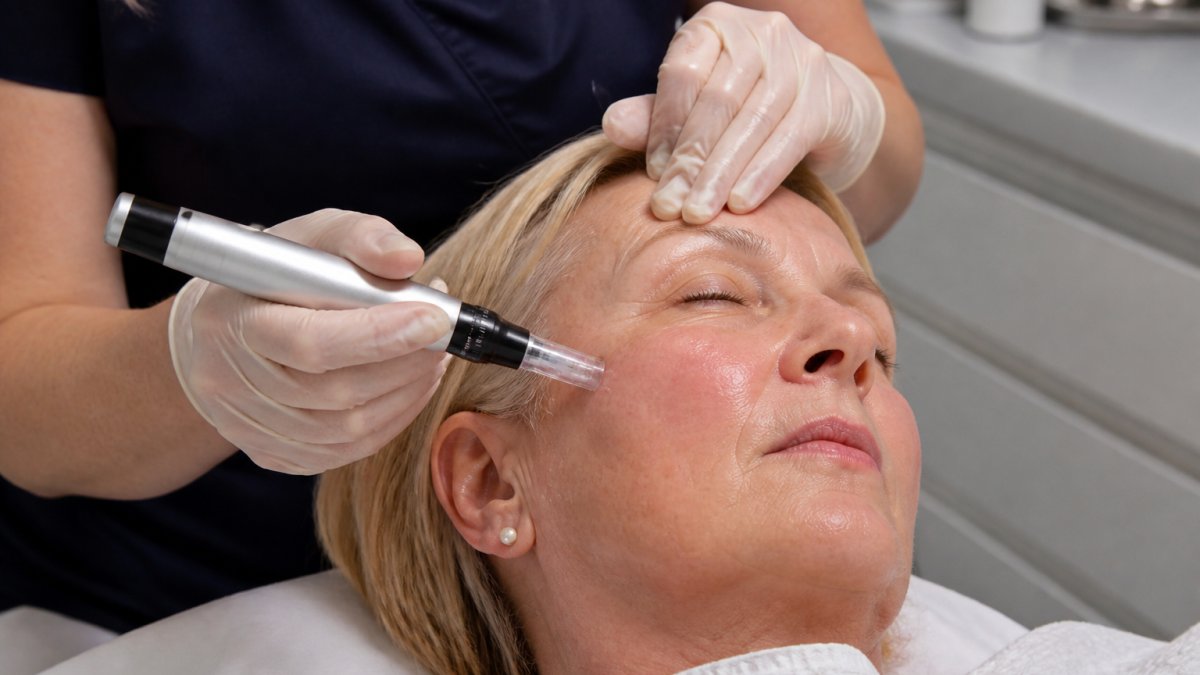
You may see slight redness and feel mild warmth during the procedure. Some clients describe it as a light scratching sensation. After treatment, your skin looks flushed but not severely damaged. This mild redness is actually a sign the treatment worked, your skin is responding.
Recovery is quick. Most people return to normal activities within 24 hours. Your skin may feel tight or slightly tender for a day or two. Avoid intense exercise, saunas, and direct sun for 48 hours. Apply soothing serums and sunscreen religiously.
Microneedling for Fine Lines and Wrinkles
Fine lines respond well to microneedling because the treatment addresses what causes them: loss of collagen and skin elasticity. As you age, collagen production drops roughly 1% per year after age 30. Microneedling reverses this by forcing your skin to rebuild collagen.
For fine lines around the eyes and mouth, microneedling is particularly effective. These areas show age first because the skin is thinner and moves constantly. A series of treatments can soften these lines noticeably. Deeper wrinkles (like nasolabial folds) improve but may not disappear entirely, they often need combination treatments for best results.
The key is realistic expectations. Microneedling for wrinkles works best on early to moderate lines. Very deep wrinkles that have been etched into your skin for decades respond more slowly. But even severe wrinkles improve with consistent treatment. Many clients see an improvement in line depth after a full course of sessions.
Microneedling Results Timeline: When to Expect Changes
Results from microneedling appear in stages. Understanding this timeline helps you stay patient and consistent.
Week 1-2: Redness fades. Your skin may feel smoother due to exfoliation, but this is temporary. Real collagen building hasn't peaked yet.
Week 3-4: Early collagen production becomes visible. Fine lines look slightly softer. Skin texture improves noticeably.
Week 6-8: Collagen remodelling accelerates. Wrinkles appear less pronounced. Skin tone evens out. This is when most clients see meaningful change.
Week 12+: Peak results emerge. Skin firmness increases. Lines continue to soften. The full benefits of a single treatment may take 12 weeks to fully develop.
For microneedling results timeline, consistency matters. One treatment produces modest improvement. A series of 4-6 treatments spaced 4-6 weeks apart delivers dramatic transformation.
Results last depending on your age and skin quality. Younger skin regenerates faster and holds results longer. Mature skin benefits from maintenance treatments to sustain improvement.
How Many Microneedling Sessions Are Needed
Most people need 4-6 sessions for visible results. This isn't arbitrary, it reflects how long collagen remodelling takes. One session stimulates collagen, but the effect is modest. Multiple sessions compound the benefit.
Sessions should be spaced 4-6 weeks apart. This timing allows collagen to build between treatments without overstressing your skin. Spacing them closer risks irritation. Spacing them further apart reduces the cumulative effect.
Your practitioner will assess your skin and recommend a personalised plan. The number of sessions needed depends on individual concerns, skin tone, texture issues, and scarring.
After your initial series, maintenance treatments keep results fresh. Many clients do one session every 6-12 months. This prevents collagen from declining again and keeps skin looking rejuvenated long-term.
Microneedling Benefits and Risks for Mature Skin
Benefits for aging skin include:
- Reduced fine lines and wrinkles
- Improved skin texture and firmness
- More even skin tone
- Reduced appearance of scars and stretch marks
- Minimal downtime compared to lasers or surgery
- Works on all skin types
The appeal is the subtlety. Unlike more aggressive treatments, microneedling delivers gradual, natural-looking improvement. Your results don't shout "I had work done", they whisper "I look refreshed."
Risks and side effects are generally mild:
- Redness and swelling (24-72 hours)
- Mild irritation or sensitivity
- Temporary dryness
- Risk of infection if aftercare is poor
- Bruising in rare cases
Serious complications are uncommon with professional treatment. Infection risk is low if your practitioner uses sterile equipment and you follow aftercare instructions. Scarring is extremely rare. Most side effects resolve within a week.
Book your consultation today →
Skin tone considerations and post-inflammatory hyperpigmentation
One consideration for darker skin tones is post-inflammatory hyperpigmentation (PIH). This is temporary darkening of treated areas that can occur after microneedling. It's not permanent scarring, it fades over weeks to months, but it's a real concern for clients with deeper skin tones.
PIH risk increases with:
- Deeper needle depths
- Darker baseline skin tone
- Sun exposure after treatment
- Certain medications (like retinoids)
The fix is straightforward: use diligent sun protection (SPF 50+) and avoid sun exposure for 2 weeks post-treatment. Some practitioners recommend vitamin C serum or hydroquinone for clients at higher PIH risk. Shallow needle depths (0.5-1.0mm) reduce PIH risk compared to deeper treatments.
This doesn't mean clients with darker skin shouldn't pursue microneedling, it means they need a customised approach. We adjust needle depth and aftercare based on your skin tone to minimise risk while maximising collagen induction.
Safety of at-home versus professional microneedling
At-home microneedling devices are popular because they're affordable and convenient. But they carry trade-offs.
At-home devices typically use needle depths of 0.25-0.5mm. This is shallow enough to be safe without professional supervision. The downside: shallow needles produce mild collagen stimulation. Results are subtle and take longer to appear.
Professional treatments use depths of 1.0-2.5mm. Deeper needles reach the dermis more effectively, triggering stronger collagen production. Results appear faster and are more dramatic. The trade-off is slightly more downtime and redness.
Safety-wise, both are safe when used correctly. At-home devices are safer because they're literally harder to misuse, the shallow needles can't damage deeper structures. Professional treatments require skill to avoid complications, but in trained hands, they're equally safe.
The real question: which delivers better results? Professional microneedling wins for efficacy and speed. At-home devices work but require patience and consistency. If you're serious about addressing aging skin, professional treatment is the stronger choice.
Comparing Microneedling with Other Anti-Aging Treatments
Microneedling isn't your only option for aging skin. How does it compare?
Laser resurfacing (ablative and non-ablative) stimulates collagen like microneedling but uses heat energy instead of needles. Results are often faster and more dramatic.
Chemical peels exfoliate the outer skin layer and stimulate collagen. Lighter peels have minimal downtime. Deeper peels deliver stronger results but require 1-2 weeks recovery.
Injectables (botulinum toxin and dermal fillers) work differently. They relax muscles (botulinum toxin) or add volume (fillers) rather than stimulating your own collagen. Results are immediate but temporary. They require ongoing maintenance.
Radiofrequency treatments use heat to tighten skin and stimulate collagen. Results are gradual like microneedling, but the mechanism is different. Some clients prefer radiofrequency for skin tightening; others prefer microneedling for texture and wrinkles.
Microneedling's advantage is the balance: strong results, minimal downtime, low risk, and natural appearance. For most clients seeking subtle, natural anti-aging results, microneedling is a suitable option.
| Treatment | Downtime | Results Timeline | Best For | Risk Level |
|---|---|---|---|---|
| Microneedling | 24-48 hours | 6-12 weeks | Fine lines, texture | Low |
| Laser resurfacing | 1-2 weeks | 2-4 weeks | Deep wrinkles, scars | Moderate |
| Chemical peels | 3-7 days | 1-2 weeks | Tone, texture | Low-moderate |
| Botulinum toxin | None | 3-7 days | Dynamic wrinkles | Low |
| Dermal fillers | 24-48 hours | Immediate | Volume loss | Low |
Is Microneedling Right for Your Aging Skin
Not everyone is a candidate for microneedling, and that's okay. The treatment works best if you meet certain criteria.
Good candidates:
- Fair to medium skin tones (darker tones need customised approach)
- Early to moderate wrinkles and fine lines
- Realistic expectations about results
- Willing to do 4-6 sessions for full benefit
- Committed to sun protection and aftercare
- No active skin infections or severe eczema
Not ideal candidates:
- Active acne or severe rosacea
- Keloid-prone skin
- Certain medications (isotretinoin, blood thinners)
- Pregnancy
- Very deep wrinkles alone (better combined with other treatments)
Your age isn't the limiting factor, your skin condition is. Some 45-year-olds benefit more than some 65-year-olds, depending on skin quality and goals.
The best way to know if microneedling is right for you is a consultation. A skilled practitioner evaluates your skin, discusses your goals, and recommends the best approach. Sometimes that's microneedling alone. Sometimes it's microneedling combined with other treatments. Sometimes it's a different treatment entirely.
At Exclusive Medical Aesthetics, we specialise in personalised, evidence-based care. We don't push microneedling on everyone, we recommend what actually suits your skin and goals.
Microneedling is effective for aging skin when approached strategically. The treatment stimulates collagen production through controlled micro-injuries, addressing the root cause of wrinkles and loss of elasticity. For clients seeking subtle, evidence-based anti-aging treatment with minimal downtime, microneedling delivers.
Frequently Asked Questions
Is microneedling effective for aging skin?
Microneedling stimulates collagen and elastin production through controlled micro-injuries, which can improve fine lines, skin texture, and firmness over multiple sessions. Effectiveness depends on needle depth, treatment frequency, and your skin's condition. Results are typically gradual and become visible after 4-6 weeks, with continued improvement over months. Professional microneedling with appropriate needle depths (typically 1.5-2.5mm for aging concerns) delivers more reliable results than at-home devices, though realistic expectations are essential, it addresses fine lines and texture better than deep wrinkles alone.
How many microneedling sessions are needed for aging skin?
Most people require 4-6 sessions spaced 4-6 weeks apart to see meaningful improvement in fine lines and skin texture. Some individuals benefit from additional sessions depending on their concerns and skin response. After the initial course, maintenance treatments help sustain results. Your practitioner will assess your skin during a consultation and recommend a personalised treatment plan based on your specific aging concerns and skin type.
When will I see results from microneedling?
Initial redness and swelling typically fade within 24-48 hours. Subtle improvements in skin texture may appear within 2-3 weeks as collagen remodelling begins. More noticeable results, smoother texture, reduced fine lines, and improved firmness, usually emerge after 4-6 weeks and continue improving for several months as collagen production increases. Full benefits are often visible after completing a series of treatments. Patience is important; microneedling works gradually through the skin's natural repair processes rather than delivering immediate transformation.
What are the main risks of microneedling for mature skin?
Common side effects include temporary redness, swelling, and mild irritation lasting 24-48 hours. Infection is rare with proper aftercare and professional treatment. Individuals with darker skin tones face a higher risk of post-inflammatory hyperpigmentation (darkening of treated areas), which can be managed with sun protection and appropriate topical care. Microneedling is not suitable if you have active skin infections, severe acne, or certain medical conditions. At-home devices carry greater risks due to inconsistent needle depth and technique. A consultation with a qualified practitioner helps identify whether microneedling is safe and appropriate for your specific skin and concerns.