 ultimate-guide
Preventative Skincare Treatments for 30s: 2026 Guide
Table of Contents
- Why Preventative Skincare in Your 30s Changes Everything
- The Skincare Routine for 30s: Morning and Evening Steps That Work
- Retinol for Beginners: How to Start Without Irritation
- How to Layer Retinol with Vitamin C (and What Not to Mix)
- Professional Facial Treatments for 30s: What Actually Delivers Results
- Building a Staged Plan: Prioritising Treatments and Budget
- When to Consult a Dermatologist or Aesthetic Clinician
- Conclusion: Your Next Steps for Preventative Skincare
- Frequently Asked Questions
Last Updated: October 16, 2026
Why Preventative Skincare in Your 30s Changes Everything
Preventative skincare in your 30s is the practice of protecting skin structure and function before visible damage becomes difficult to reverse. The decade matters because collagen production begins its natural decline, and the habits you build now determine how that decline plays out.
Below, we break down exactly what changes in your skin, which ingredients earn their place, and how to decide when professional treatments are worth it.
How Collagen Loss and Skin Aging Begin in Your 30s
Collagen is the protein that gives skin its firmness and elasticity, and production starts falling gradually from the mid-twenties onwards. The visible results arrive in your thirties: fine lines around the eyes, a duller complexion, and skin that no longer bounces back the way it did.
Three changes happen at once:
- Collagen and elastin decline, reducing skin firmness
- Cell turnover slows, causing dullness and uneven texture
- Volume shifts begin subtly around the cheeks and under the eyes
Sun exposure is the single biggest accelerant of this process. According to Cancer Research UK's sun safety guidance, ultraviolet radiation damages skin at a cellular level, which is why daily sun protection matters more than any single serum.
The Skincare Routine for 30s: Morning and Evening Steps That Work
A skincare routine for your 30s needs four things: gentle cleansing, antioxidant protection, hydration, and a retinoid at night. Complexity is not the goal. Consistency is.
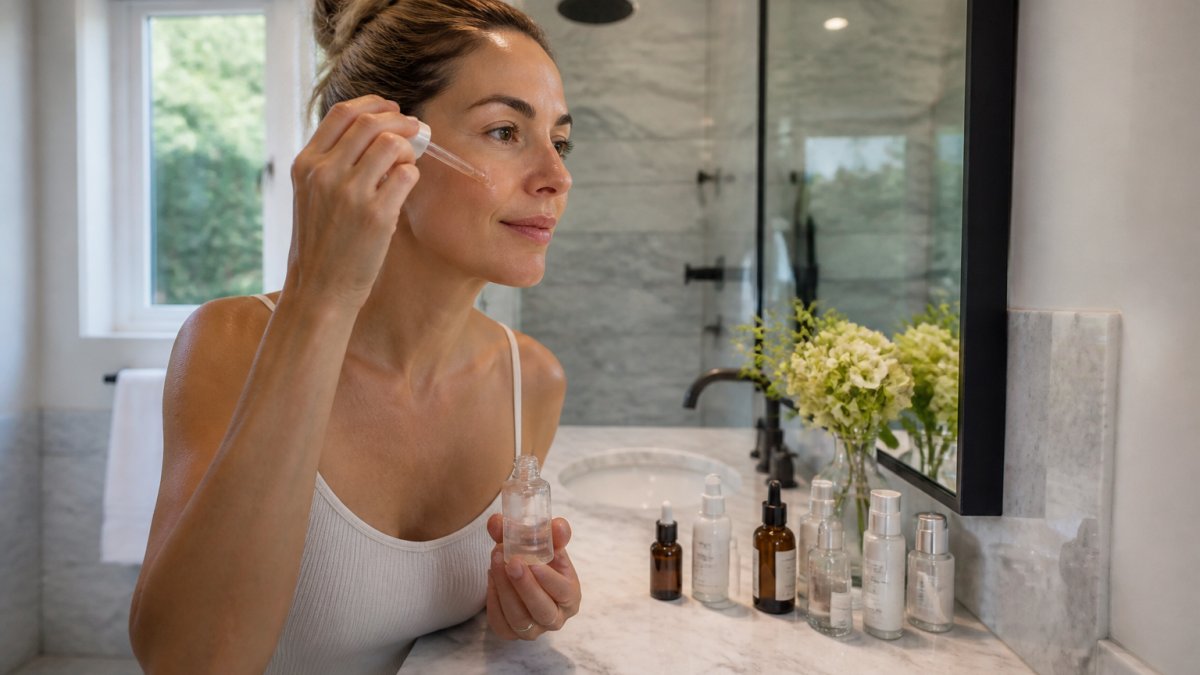
Morning: cleanse, apply vitamin C serum, moisturise, then broad-spectrum sunscreen of at least SPF 30.
Evening: cleanse, apply retinol (start two nights a week), follow with a hydrating moisturiser.
Cleansing, Hydration, and Barrier Support
The skin barrier is the outer layer that retains moisture and keeps irritants out. When it is compromised, you get redness, tightness, and sensitivity, and active ingredients sting rather than help.
A common mistake is over-cleansing. Foaming cleansers used twice daily strip the barrier for many people. A cream or gel cleanser in the evening, with a water rinse in the morning, suits most skin types.
Hyaluronic acid draws water into the skin and pairs well with any routine. Apply it to slightly damp skin, then seal it with moisturiser, or it can draw moisture out rather than in.
Retinol for Beginners: How to Start Without Irritation
Retinol for beginners works best at low strength, low frequency, and with a buffer. Start with two nights per week, apply a pea-sized amount to dry skin, and moisturise afterwards. Expect mild flaking in the first few weeks; this settles as your skin adjusts.
What most guides miss is that more retinol is not better retinol. Doubling the frequency before your skin has adapted causes irritation that sets you back weeks.
If you are pregnant, breastfeeding, or taking prescription medication, check with a clinician before starting any retinoid.
How to Layer Retinol with Vitamin C (and What Not to Mix)
The correct way to layer retinol with vitamin C is to separate them: vitamin C in the morning, retinol at night. Both are effective, but using them together increases the risk of irritation without improving results.
A simple rule set:
- Vitamin C: morning, under sunscreen
- Retinol: evening, after cleansing
- Hyaluronic acid: either, but always under a moisturiser
- Avoid combining: retinol with strong exfoliating acids in one session
If your skin tolerates both well after several weeks, some people do use vitamin C in the morning and a low-strength retinol at night with no issue. That is the standard approach we recommend.
Professional Facial Treatments for 30s: What Actually Delivers Results
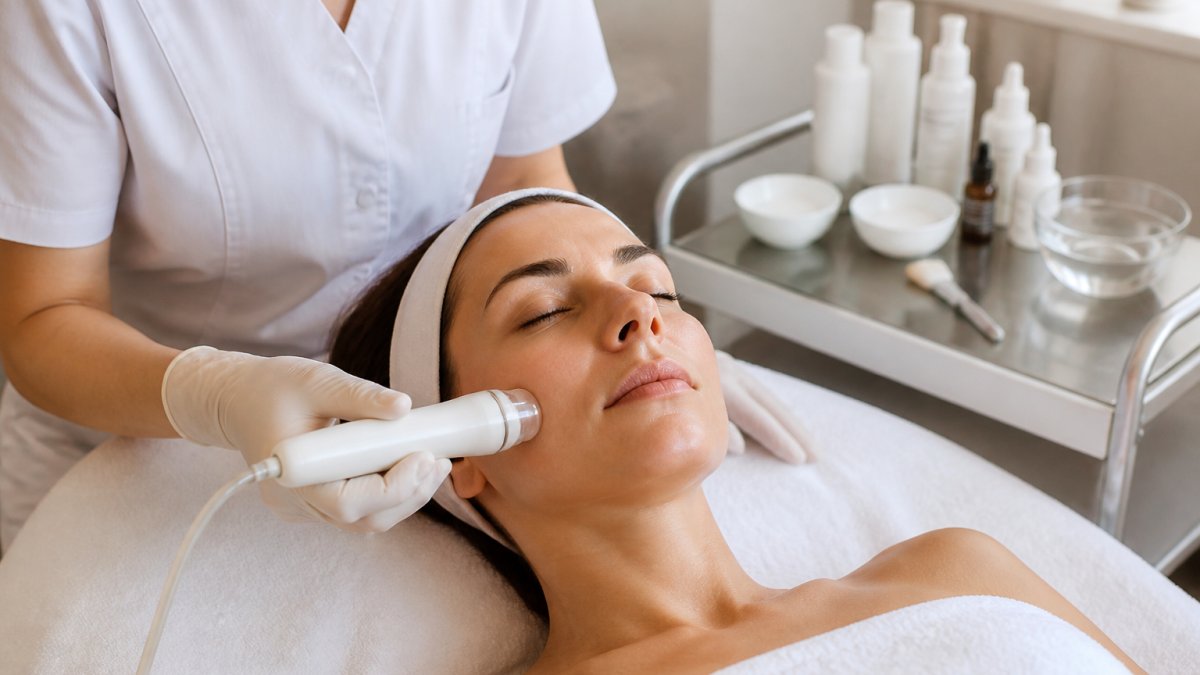
Professional facial treatments for 30s fall into two groups: maintenance treatments that support your home routine, and corrective treatments that address a specific concern. Knowing which you need prevents wasted spend, and knowing who should avoid each one prevents harm.
| Treatment type | Typical purpose | Downtime | Maintenance | Who should be cautious |
|---|---|---|---|---|
| Hydrating facial | Immediate glow, hydration | None | Monthly | Anyone with active breakouts or open lesions on the treatment area |
| Microneedling | Texture, fine lines, scarring | 1-2 days of redness | Course of 3-6 | Active acne, eczema or psoriasis in the area, recent isotretinoin use, pregnancy |
| Chemical peel | Pigmentation, dullness | 2-5 days of peeling | Every 4-8 weeks | Sensitive or rosacea-prone skin, recent sun exposure, pregnancy for certain acids |
| Laser resurfacing | Pigmentation, texture | Several days | Usually a course | Recent sun exposure, darker skin tones without an experienced operator, active infection |
| Injectables | Expression lines, volume | Minimal | Every 3-6 months | Pregnancy, breastfeeding, certain neuromuscular conditions |
Matching the Treatment to Your Skin Type and Concern
A one-size-fits-all recommendation is the fastest way to waste money. The right choice depends on your skin type, your main concern, and how much downtime you can accept.
Book your consultation today →
- Acne-prone skin: avoid heavy occlusive facials and oil-based products. Salicylic acid peels and gentle microneedling once breakouts are controlled tend to suit better than laser, which can worsen active inflammation.
- Sensitive or rosacea-prone skin: start with hydrating facials and barrier support. Introduce peels at low strength and short contact time, and avoid aggressive resurfacing until the barrier is stable.
- Dry or dehydrated skin: hydrating facials, hyaluronic acid infusions and low-strength peels work well. Microneedling can help product absorption but needs a longer recovery window on dry, compromised skin.
- Pigment-prone skin: this is where treatment choice matters most. Sun protection is non-negotiable before any procedure, because post-inflammatory hyperpigmentation after a peel or laser is a common and frustrating outcome. A series of gentle peels with strict SPF is often safer than a single aggressive laser session.
Evidence, Realistic Outcomes, and What to Ask Before Booking
Results vary by skin type, concern, and how consistently you maintain the treatment. A single facial will not change your skin long-term; a course of microneedling with a home routine between sessions will.
Ask any clinic four questions before booking:
- What evidence supports this treatment for my specific concern?
- What downtime and side effects should I expect, and how will they be managed?
- What results are realistic in my case, and what would you consider a failure?
- What are the contraindications, and how do you screen for them?
A practitioner who cannot answer all four clearly is not one to proceed with. As guidance from the NHS on cosmetic procedures makes clear, choosing a qualified, regulated practitioner is the most important decision you make.
Building a Staged Plan: Prioritising Treatments and Budget
Prioritise in this order: daily sun protection, a retinoid, then professional treatments. This sequence delivers the most improvement per pound spent, because the home routine is what maintains any result a clinic achieves.
A staged plan might look like:
- Months 1-2: establish the morning and evening routine. Sunscreen daily, vitamin C in the morning, a low-strength retinoid two nights a week building to most nights.
- Months 3-4: add a course of microneedling or a gentle peel, spaced four to six weeks apart.
- Months 5-6: review results with your clinician and adjust. If pigmentation is the main concern, this is when a series of peels or a laser course would typically begin.
What Treatments Actually Cost
Pricing depends on the treatment, the number of sessions, and your individual plan. A clinic should give you a written quote after consultation, and you should be wary of any provider who pressures you to commit to a course before you have had a chance to consider it.
Budgeting for Maintenance, Not Just the First Course
The most common budgeting mistake is planning for the initial course and forgetting the upkeep. A course of microneedling might cost several hundred pounds, but the results fade without maintenance sessions every few months and a consistent home routine between them.
A practical approach is to set an annual skincare budget and split it between products and treatments. Many people find that spending more on sunscreen and a good retinoid, and less on frequent facials, gives better long-term value.
When to Consult a Dermatologist or Aesthetic Clinician
See a clinician if you have persistent acne, changing moles, sudden pigmentation, or a concern that has not responded to a consistent routine for three months. These are medical questions, not cosmetic ones.
For aesthetic concerns, a consultation with an experienced clinician gives you an honest answer about what is achievable. At Exclusive Medical Aesthetics, our approach is evidence-based and personalised: we recommend only what suits your skin and goals, and we will tell you when a treatment is not right for you. As guidance from the NHS on cosmetic procedures makes clear, choosing a qualified, regulated practitioner is the most important decision you make.
Conclusion: Your Next Steps for Preventative Skincare
Preventative skincare in your 30s is not complicated, but it does require consistency and honest guidance. The routine matters, the sunscreen matters, and so does knowing when to bring in professional support.
If you would like a personalised plan built around your skin, our team offers advanced clinical expertise, personalised care, and evidence-based treatments designed for elegant, natural-looking results. Book your consultation today with Exclusive Medical Aesthetics and start a plan that works for the decade ahead.
Frequently Asked Questions
Which preventative skincare treatments are worth considering in your 30s?
In your 30s, focus on daily broad-spectrum SPF 30 or higher, a vitamin C serum in the morning, and a retinoid at night to support collagen production and address early fine lines. Professional options like hydrating facials, mild chemical peels, and microneedling can complement your routine. A staged plan that prioritises sun protection and topical actives gives the best foundation before considering more advanced treatments.
When should you start using retinol in your 30s?
Many dermatologists suggest starting a low-strength retinol in your early 30s, once your skin is consistently protected from the sun. Begin with a pea-sized amount twice a week, buffering with moisturiser if needed. Gradually increase frequency as tolerance builds. If you are pregnant, breastfeeding, or planning pregnancy, avoid retinoids and ask a clinician about alternatives.
Can vitamin C and retinol be used in the same skincare routine?
Yes, but timing matters. Apply vitamin C in the morning for antioxidant protection against pollution and UV, and retinol at night when it is more stable and your skin repairs itself. If you prefer to use both in one sitting, apply vitamin C first, wait a few minutes, then retinol. Some people with sensitive skin may need to alternate days to avoid irritation.
Are professional skin treatments necessary in your 30s?
They are not essential, but they can support your at-home routine. Professional facial treatments for 30s, such as hydrating facials or gentle chemical exfoliation, help maintain skin texture and moisture balance. More advanced options like microneedling or laser may be considered for specific concerns. A consultation with a qualified clinician will help you decide what is appropriate for your skin.
How often should you have a facial in your 30s?
Most people benefit from a professional facial every four to six weeks, matching the skin's natural renewal cycle. If you are addressing a specific concern like dullness or congestion, a clinician may recommend a short series of treatments spaced two to four weeks apart, followed by maintenance sessions. Your exact schedule depends on your skin type and goals.
What is the 4-2-4 rule in skincare?
The 4-2-4 rule is a popular guideline for layering products: cleanse for up to four minutes, apply treatment products for two minutes, and allow four minutes for moisturiser and SPF to absorb. It is not a clinical standard, but it encourages a slower, more deliberate routine. The key is to give each product time to settle before the next step.