 blog
Chemical Peels vs Laser for Skin Texture: 2026 Guide
Table of Contents
- Chemical Peels vs Laser: How They Resurface Skin Differently
- Chemical Peel for Acne Scars: What to Expect
- Laser Treatment for Acne Scars: What to Expect
- Chemical Peel Downtime: Recovery Timeline and Aftercare
- Laser Resurfacing Downtime: Recovery Timeline and Aftercare
- Which Treatment Suits Your Skin Tone and Concerns?
- Frequently Asked Questions
Last Updated: October 14, 2026
Chemical Peels vs Laser: How They Resurface Skin Differently
Chemical peels vs laser is the choice most people face when skin texture stops responding to creams. Both resurface the skin. They just do it in opposite ways. A chemical peel dissolves the top layers with an acid solution. A laser treatment uses heat to remove or remodel skin in precise columns. At Exclusive Medical Aesthetics, we assess texture, tone and downtime before recommending either.
The key difference comes down to control. Peels work across a whole area at a set depth. Lasers let a practitioner adjust depth and target specific concerns, such as scarring or pigmentation, millimetre by millimetre.
What a Chemical Peel Does
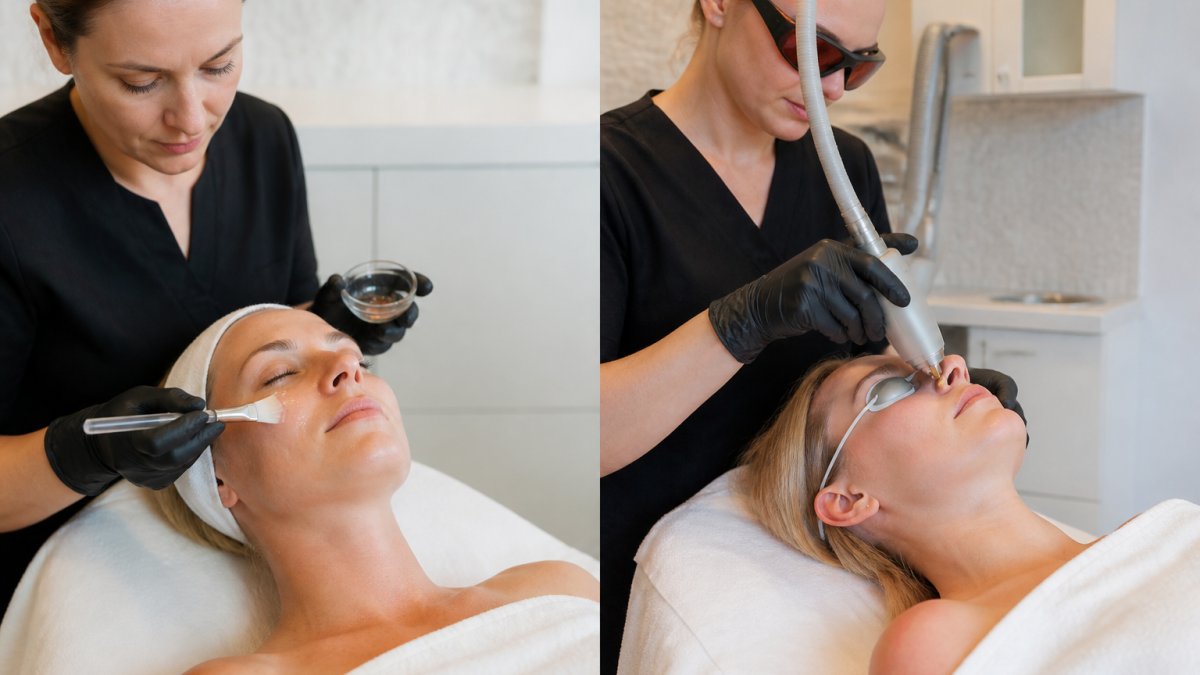
A chemical peel is a treatment that applies an acid solution to the skin to remove damaged surface cells and trigger fresh cell turnover. Depth depends on the solution and how long it stays on.
- Superficial peels: mild acids, little to no downtime, subtle glow
- Medium-depth peels: reach deeper layers, treat pigmentation and fine lines
- Deep peels: strong formulas, reserved for specific concerns, longer recovery
Peels suit rough texture, dullness and mild sun damage. They are less precise for deep scarring.
What a Laser Treatment Does
A laser treatment directs focused light energy into the skin to remove damaged layers or heat tissue below the surface. That heat boosts collagen production.
Two main types exist:
- Ablative lasers: remove the top layer outright, stronger results, more downtime
- Non-ablative lasers: heat deeper tissue while leaving the surface intact, gentler recovery
Fractional lasers treat the skin in tiny columns, leaving healthy tissue between them to speed healing.
Chemical Peel for Acne Scars: What to Expect
A chemical peel for acne scars works on the surface layer of the skin, so its value depends almost entirely on the type of scar being treated. Acne scarring is not one condition, and a peel that transforms one type can do very little for another.
Matching Peel Depth to Scar Type
- Post-inflammatory hyperpigmentation (flat dark marks): these are pigment changes, not true scars. Superficial peels containing glycolic, mandelic or salicylic acid can fade them over a course of several sessions, often spaced two to four weeks apart.
- Rolling and boxcar scars (shallow indentations): medium-depth peels using trichloroacetic acid (TCA) at lower concentrations can soften the edges and improve the shadowing that makes them visible. Improvement is usually partial, not complete.
- Ice-pick and deep boxcar scars: these extend too far below the surface for a peel to reach. A peel may refine the surrounding skin but will not fill or flatten the scar itself.
- Hypertrophic or keloid scars: raised scars respond poorly to peels and are usually managed with other approaches entirely.
What a Realistic Course Looks Like
Most practitioners recommend a series rather than a single treatment. A common pattern is three to six superficial or medium peels, spaced two to four weeks apart, with results building gradually as new skin cells turn over. Collagen continues to remodel for weeks after the final session, so the full picture is not visible immediately.
Expect improvement in texture, tone and the appearance of shallow scarring, not scar removal. Peels are best understood as a refinement tool, not a reconstruction tool.
Where Peels Fall Short
A peel cannot rebuild lost volume, break down fibrous scar tissue, or lift a tethered scar. For those, fractional laser resurfacing, microneedling or subcision usually do more. Many clinicians combine a peel with one of these to address both surface pigment and deeper texture in the same plan.
Skin Tone and Pigment Risk
Darker skin tones carry a higher risk of post-inflammatory hyperpigmentation after any peel, and the risk rises with peel depth. Superficial peels with mandelic or salicylic acid are often preferred for these tones because they act more gently on melanocytes. Medium and deep peels require a practitioner experienced in treating pigmented skin, and a priming routine, often including a topical retinoid or hydroquinone, may be recommended for a few weeks beforehand to reduce the chance of rebound darkening.
If you are unsure which scar type you have, a consultation is the only reliable way to tell. A practitioner can assess scar depth, tethering and your individual pigment risk before recommending a peel depth or an alternative.
Laser Treatment for Acne Scars: What to Expect
A laser treatment for acne scars reaches deeper than most peels. Fractional lasers break down scar tissue and stimulate collagen, which can lift and smooth indentations over time.
Results are not instant. Collagen remodels for months after the last session. Most people need a series of treatments, and some scarring improves rather than disappears.
Lasers also carry a higher risk of pigmentation changes, especially in darker skin tones. That risk makes practitioner skill and correct settings essential.
Book your consultation today →
Chemical Peel Downtime: Recovery Timeline and Aftercare
Chemical peel downtime depends on depth. Superficial peels may cause slight redness for a day. Medium peels bring visible peeling for several days. Deep peels need longer recovery.
General recovery pattern:
- Day 1-2: redness, tightness, mild stinging
- Day 3-5: visible peeling and flaking
- Day 6-10: fresh, pink skin emerges
- Week 2+: tone and texture settle
Aftercare matters as much as the peel. Keep the skin moisturised, avoid sun exposure, and skip strong actives until healed.
| Peel Depth | Typical Downtime | Best For |
|---|---|---|
| Superficial | 1-2 days | Dullness, mild texture |
| Medium | 5-7 days | Pigmentation, fine lines |
| Deep | 10-14 days | Strong sun damage, wrinkles |
Laser Resurfacing Downtime: Recovery Timeline and Aftercare
Laser resurfacing downtime runs longer than most peels, especially with ablative lasers. Non-ablative treatments may only cause redness for a few days. Ablative lasers can leave skin raw and oozing for a week or more.
A rough timeline:
- Day 1-3: redness, swelling, sensitivity
- Day 4-7: skin begins to flake and renew
- Week 2: most surface healing done
- Week 3-4: redness fades, results start to show
Sun protection is non-negotiable during recovery. New skin burns easily and pigmentation can rebound.
Which Treatment Suits Your Skin Tone and Concerns?
Skin tone changes the recommendation more than any other factor. This is the part most guides skip.
Darker skin tones carry a higher risk of post-inflammatory hyperpigmentation from both treatments. Lasers, in particular, can trigger dark patches if the settings are wrong. Peels are often safer for these tones, but deep peels still carry risk.
Lighter skin tones tolerate stronger lasers with less pigmentation risk.
Match treatment to concern:
- Rough texture and dullness: superficial or medium peels
- Fine lines and wrinkles: medium peels or non-ablative lasers
- Acne scars: fractional lasers, sometimes combined with peels
- Sun damage and dark spots: medium peels or pigment-specific lasers
For a personalised plan, a consultation is the only safe way to decide. NHS information on cosmetic procedures advises checking a practitioner's qualifications and registration before any treatment.
Frequently Asked Questions
What are the key differences between chemical peels and laser treatments?
Chemical peels use an acid solution to remove the outer layers of skin, triggering new cell turnover. Laser treatments use focused light energy to heat targeted layers, boosting collagen production. Peels suit surface-level concerns like rough texture and mild pigmentation. Lasers reach deeper, making them better for scarring, fine lines, and stubborn sun damage. The right choice depends on your skin type, concern, and how much downtime you can accept.
Which is better for acne scars: a chemical peel or laser resurfacing?
For shallow acne scars and post-inflammatory pigmentation, a medium-depth chemical peel can soften texture and even out tone over a few sessions. For deeper pitted or rolling scars, laser resurfacing generally delivers more visible improvement because it reaches the dermis where scar tissue forms. Many practitioners combine both, starting with a peel to prepare the skin, then using laser for deeper correction. A consultation will confirm which suits your scarring pattern.
Do chemical peels or laser treatments have less downtime?
Superficial chemical peels typically involve 1-3 days of mild redness and flaking. Medium-depth peels need 5-7 days of visible peeling. Laser resurfacing downtime runs longer: non-ablative lasers cause 2-4 days of redness, while ablative lasers like CO2 can require 7-14 days of healing. If you need to return to work quickly, a superficial peel or non-ablative laser is the more practical option.
Are chemical peels safe for darker skin tones?
Chemical peels can be suitable for darker skin tones, but the risk of post-inflammatory hyperpigmentation is higher. Superficial peels with gentler acids are usually better tolerated. Laser treatments carry similar risks, though certain lasers are designed with wavelengths that bypass the melanin in the upper skin layers. A practitioner experienced with your skin tone should assess you before any treatment to reduce pigmentation risk.
The right choice between a chemical peel and laser comes down to your skin tone, your concern, and how much downtime you can accept. At Exclusive Medical Aesthetics, we build personalised, evidence-based plans using advanced clinical expertise, tailored to your skin and goals. Book your consultation today to find the treatment that delivers elegant, natural-looking results.