 Ultimate guide
How to Get the Benefits of Medical Grade Microneedling
Last Updated: October 28, 2026
Quick Summary
Medical grade microneedling creates precise micro-channels in the skin with fine sterile needles, triggering a wound-healing response that stimulates collagen production. This improves skin texture, tone and firmness, and can soften acne scars over a course of sessions. It is a clinician-led procedure with deeper dermal reach than at-home rollers.
- Medical grade microneedling uses adjustable needle depth for deeper dermal reach than at-home rollers.
- Many patients see meaningful softening of rolling and boxcar scars over three to six sessions.
- Sessions are spaced four to six weeks apart, with improvement continuing for months after the final one.
- Deep ice-pick scarring and mature stretch marks often need a combination approach rather than microneedling alone.
- At-home rollers offer minimal collagen stimulation and are hard to sanitise properly.
Table of Contents
- What Medical Grade Microneedling Actually Does to Your Skin
- The Core Benefits: Texture, Tone and Firmness
- Microneedling for Acne Scars and Stretch Marks
- Medical-Grade vs At-Home Microneedling: What's the Difference?
- Your Microneedling Results Timeline, Session by Session
- How Many Microneedling Sessions Are Needed?
- Risks, Downtime and Who Should Avoid Treatment
- Book a Consultation to See If Microneedling Suits Your Skin
- Frequently Asked Questions
What Medical Grade Microneedling Actually Does to Your Skin
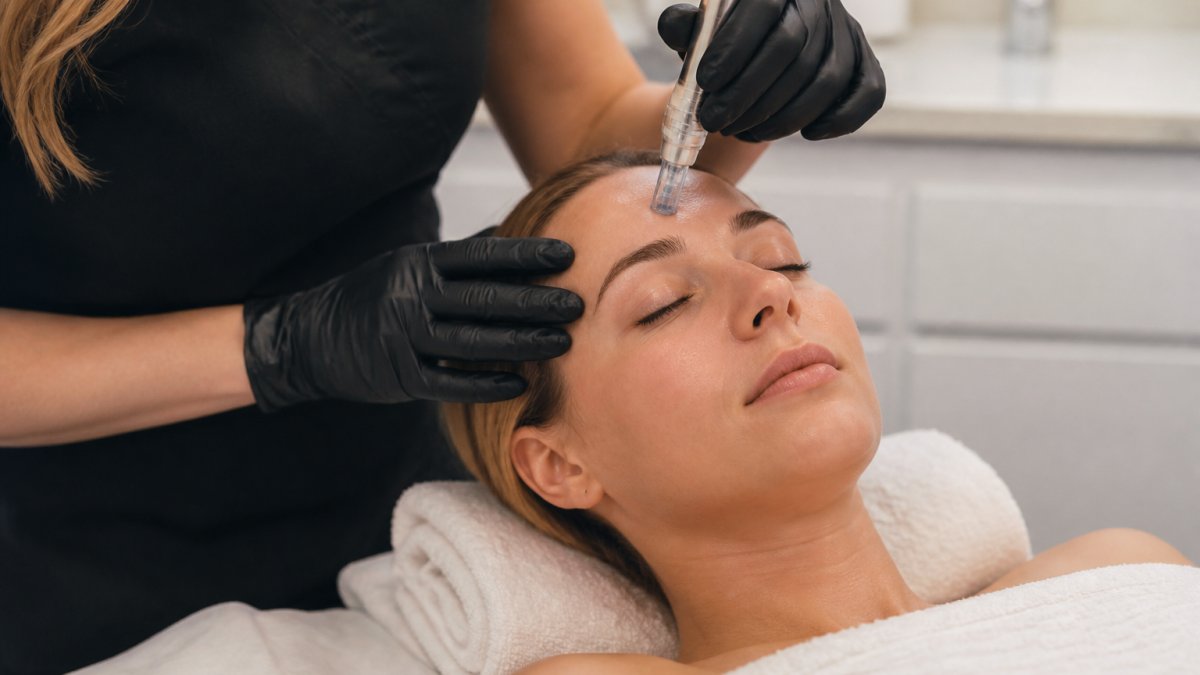
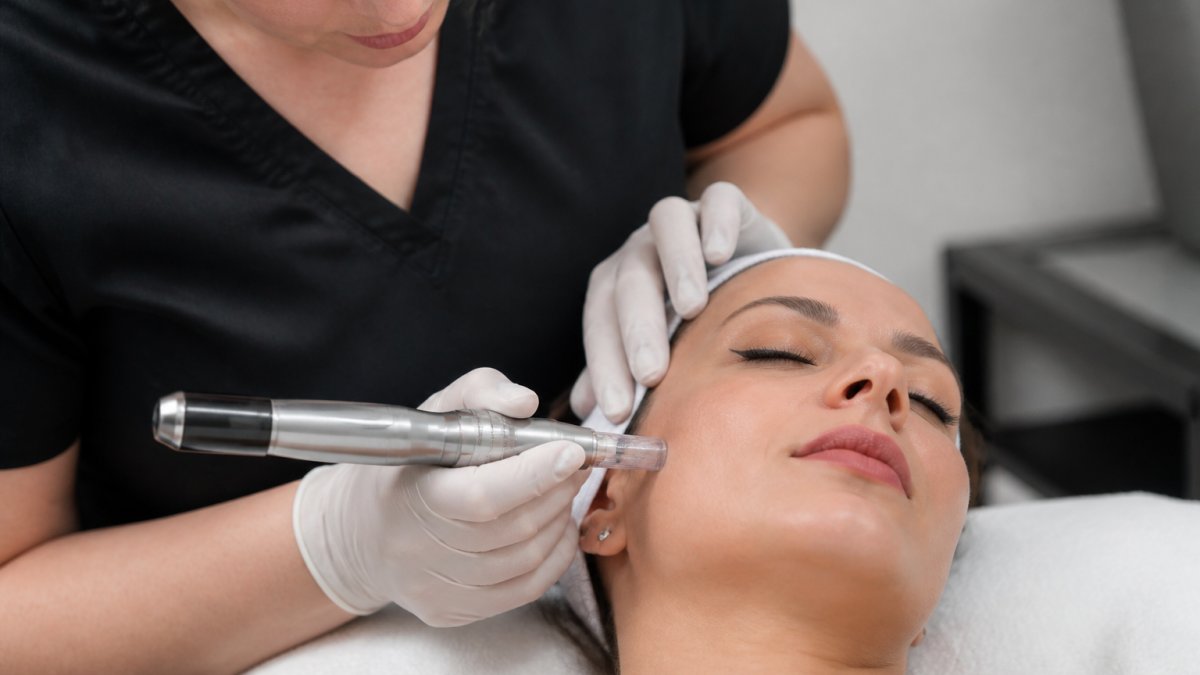
Medical grade microneedling is a controlled clinical procedure in which fine sterile needles create precise micro-channels in the skin to trigger a wound-healing response and stimulate collagen production (pubmed.ncbi.nlm.nih.gov).
How the Collagen Response Works
For a deeper clinical look at how this process affects aging skin, read our guide on whether microneedling is effective for aging.
The Core Benefits: Texture, Tone and Firmness
If texture and tone are your main concern, our comparison of the best aesthetic treatments for skin texture shows how microneedling sits against other options.
Microneedling for Acne Scars and Stretch Marks
If scarring is your main concern, our before and after gallery shows how outcomes vary by scar type, and our guide to downtime for non-surgical procedures sets out what recovery looks like between sessions.
Medical-Grade vs At-Home Microneedling: What's the Difference?
| Feature | Medical-Grade | At-Home Roller |
|---|---|---|
| Needle depth | Adjustable, deeper dermal reach | Shallow, surface only |
| Collagen stimulation | Significant | Minimal |
| Sterility | Single-use clinical cartridges | Hard to sanitise properly |
| Risk of scarring | Low with trained practitioner | Higher if misused |
| Supervision | Clinician-led | None |
Your Microneedling Results Timeline, Session by Session
To see what real outcomes look like, view our before and after gallery.
How Many Microneedling Sessions Are Needed?
If you are weighing up options, our comparison of the best aesthetic treatments for skin texture shows how microneedling sits against other approaches, and a professional aesthetic consultation is the right place to agree a realistic session plan.
Book your consultation today →
Risks, Downtime and Who Should Avoid Treatment
For a broader look at recovery across treatments, see our guide to downtime for non-surgical procedures.
Book a Consultation to See If Microneedling Suits Your Skin
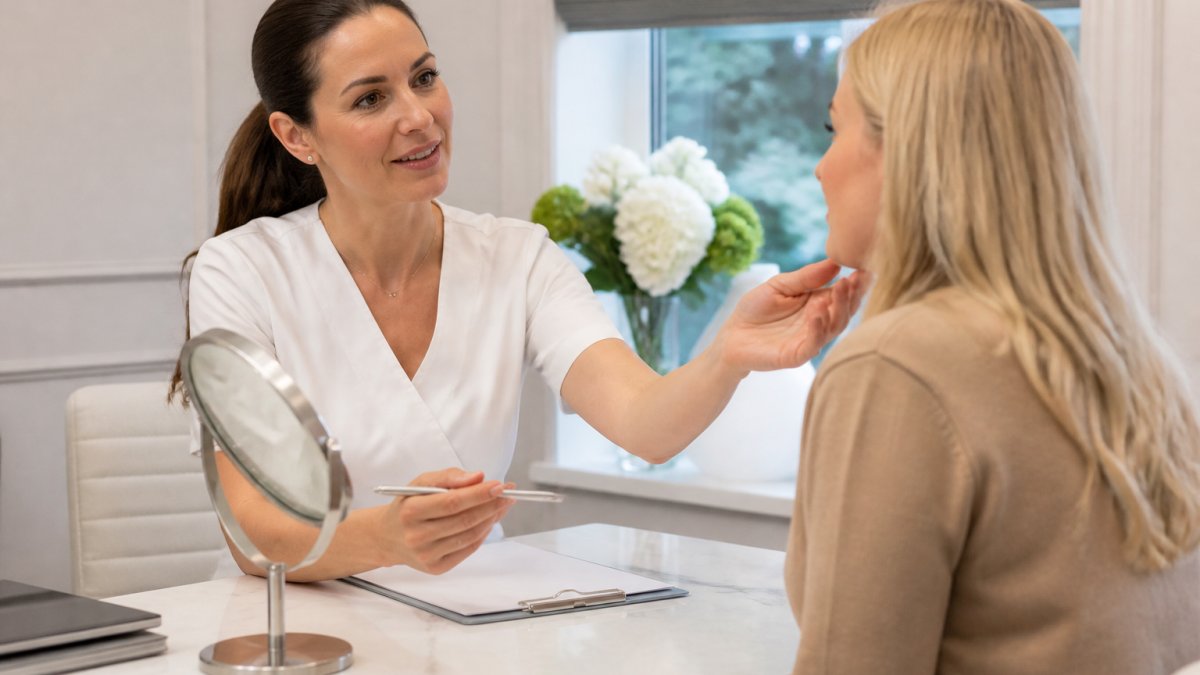
If you want subtle, natural-looking results rather than an overdone look, the honest starting point is a proper assessment. At Exclusive Medical Aesthetics, our evidence-based approach means personalised care and advanced clinical expertise, and we will tell you plainly if microneedling is not right for your skin. Book a professional aesthetic consultation to discuss your goals and build a plan around your skin.
Frequently Asked Questions
How is medical-grade microneedling different from at-home microneedling?
Medical-grade microneedling uses longer needles, typically 0.5mm to 2.5mm, delivered by a trained clinician with controlled depth and speed. At-home rollers and stamps usually sit at 0.2mm to 0.5mm and cannot reach the dermis where collagen remodeling happens. The clinical version also allows numbing cream, sterile technique and tailored depth per zone, which is why results for scarring and texture tend to be more consistent. At-home devices carry a higher risk of irritation and infection when used incorrectly.
How long does it take to see results from microneedling?
Most people notice a fresher look and improved glow within 1 to 2 weeks of the first session as cell turnover increases. Collagen production builds more slowly, so firmer texture and softened fine lines usually appear after 4 to 6 weeks, with acne scars and pigmentation improving over a course of 3 to 6 sessions spaced 4 to 6 weeks apart. The microneedling results timeline varies with skin condition, age and aftercare, so a clinician will set realistic milestones at consultation.
How many microneedling sessions are usually needed?
For general skin rejuvenation, most clinicians recommend 3 sessions spaced about 4 weeks apart, then maintenance every 6 to 12 months. Acne scars, stretch marks and melasma often need 4 to 6 sessions. How many microneedling sessions are needed depends on your concern, skin tone and how well you respond, so the plan is adjusted as you progress rather than fixed in advance.
Who should avoid microneedling?
Microneedling is not suitable during pregnancy or breastfeeding, over active acne or skin infections, on keloid-prone skin, or if you take blood thinners or have a bleeding disorder. It should also be avoided over recent fillers, botulinum toxin, or active eczema and psoriasis. Anyone with a history of poor scarring or darker skin tones prone to post-inflammatory hyperpigmentation should have a careful consultation first so the clinician can assess suitability and adjust the approach.
The difference between microneedling that works and microneedling that disappoints usually comes down to assessment, technique and aftercare. Exclusive Medical Aesthetics combines advanced clinical expertise, personalised care and evidence-based treatments to deliver elegant, natural-looking results. Get started with Exclusive Medical Aesthetics and book your consultation today.