 blog
Best Aesthetic Treatments for Skin Texture: 2026 Guide
Table of Contents
- Why Skin Texture Changes and What Actually Works
- Treatments for Uneven Skin Texture: A Practical Comparison
- Microneedling for Skin Texture: What It Can and Cannot Fix
- Chemical Peel for Skin Texture: Depth, Suitability and Results
- Laser, Light and Energy-Based Resurfacing
- Skin Texture Treatment Downtime: What to Expect Week by Week
- Choosing the Right Treatment for Your Skin Type and Concern
- Conclusion
- Frequently Asked Questions
Last Updated: October 21, 2026
Why Skin Texture Changes and What Actually Works
Skin texture is the visible surface quality of your skin: how smooth, even and firm it feels. Texture changes come from sun damage, collagen loss, dead cell build-up and slower cell turnover. At Exclusive Medical Aesthetics, we see texture concerns more often than almost any other issue.
The best aesthetic treatments for skin texture work by rebuilding collagen and removing damaged surface cells. That is the whole game. Everything else is detail.
Most guides get this wrong. They list products and procedures without explaining which layer of skin each one reaches. That matters, because a cream and a laser do very different jobs.
Below, we break down each option by what it fixes, who it suits and how much recovery it needs. We also cover the part most clinics skip: realistic timelines.
Treatments for Uneven Skin Texture: A Practical Comparison
The best aesthetic treatments for skin texture fall into two camps: at-home maintenance and in-clinic procedures. The table below shows how they compare on depth, downtime, typical session count, and what each one targets. Pricing varies by provider, location, and the area treated.
| Treatment | Depth | Typical Downtime | Typical Sessions | Indicative Cost per Session | Best For |
|---|---|---|---|---|---|
| Retinoids | Surface to mid | Mild flaking, 1-2 weeks to adjust | Ongoing nightly use | £15-£60 per tube | Fine lines, rough patches |
| AHA/BHA exfoliation | Surface | None to 2 days | 2-3 times weekly, ongoing | £10-£40 per product | Dullness, clogged pores |
| Microneedling | Dermis | 1-3 days redness | 3-6, spaced 4-6 weeks | £150-£400 | Acne scars, pores, firmness |
| Chemical peel | Surface to mid | 3-7 days peeling | 3-6, spaced 2-4 weeks | £100-£350 | Pigmentation, uneven tone |
| Laser resurfacing | Deep | 5-14 days | 1-3, spaced 6-12 weeks | £400-£1,500 | Sun damage, deep texture |
The pattern is simple. The deeper the treatment, the more it changes texture, and the more recovery it needs. But depth is not the only variable. Evidence quality matters too: retinoids and chemical exfoliation have decades of published research behind them, while some energy-based devices rely more on manufacturer studies than independent trials. Ask your practitioner what the evidence base is for any device they recommend.
A common mistake is to choose the most aggressive option first. Most practitioners find that starting with a mid-depth approach and building up gives better long-term results with fewer complications, especially for those new to aesthetic treatments.
Microneedling for Skin Texture: What It Can and Cannot Fix
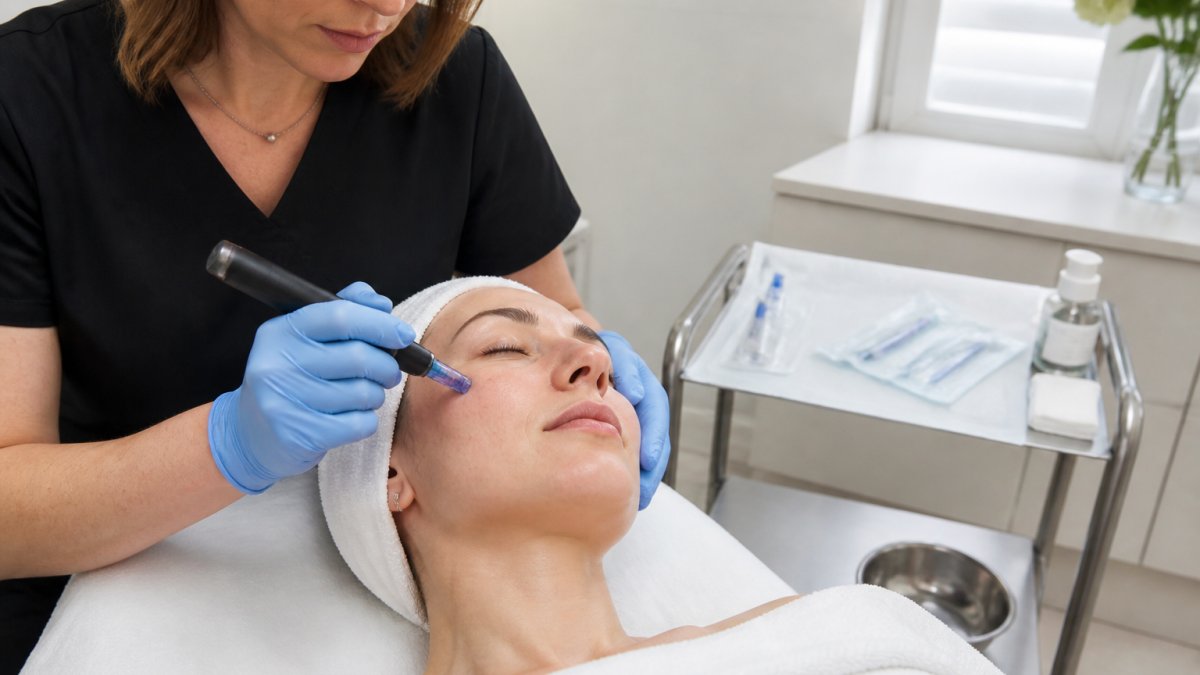
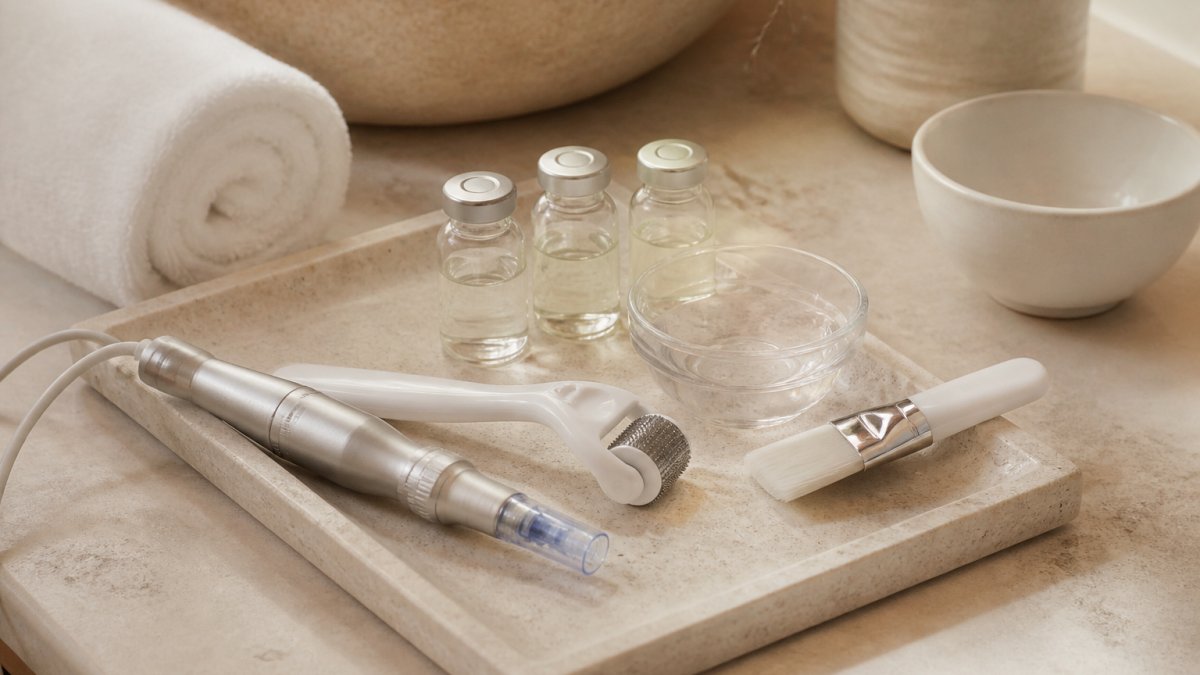
Microneedling for skin texture creates tiny controlled punctures in the dermis, triggering collagen production as the skin repairs. It is one of the most versatile options we offer for texture, because it works on acne scars, enlarged pores and early fine lines.
What it can fix:
- Rolling and shallow acne scars
- Rough, crepey surface texture
- Pores that look enlarged
- Early skin firmness loss
What it cannot fix: deep ice-pick scars, significant volume loss or pronounced laxity. Those need a different approach.
Radiofrequency microneedling adds heat energy to the needles, which drives a stronger collagen response and some skin tightening. It suits patients wanting more lift alongside texture work.
If you have had microneedling elsewhere and saw little change, the likely reasons are too few sessions, too shallow a depth, or no maintenance plan. Depth and consistency decide the result.
Chemical Peel for Skin Texture: Depth, Suitability and Results
A chemical peel for skin texture applies an acid solution to remove damaged layers and reveal smoother skin beneath. Peels come in three depths, and the choice matters more than the brand of acid used.
- Superficial peels: little to no downtime, good for dullness and mild roughness
- Medium peels: several days of peeling, targets pigmentation and uneven tone
- Deep peels: significant recovery, reserved for pronounced sun damage
Medium and deep peels carry a real risk of post-inflammatory hyperpigmentation, especially on deeper skin tones. This is where practitioner skill matters. A peel that is too aggressive on the wrong skin type can leave marks that outlast the original problem.
We assess skin type, history and downtime tolerance before recommending any peel. Stronger is not better. Correctly matched is better.
Laser, Light and Energy-Based Resurfacing
Fractional laser resurfacing treats columns of skin while leaving surrounding tissue intact, which speeds healing. It is the strongest option for sun damage, deep texture and fine lines. Light-based treatments such as intense pulsed light target pigment and redness rather than texture itself.
Ultrasound tightening works on laxity, not surface roughness. It is a useful add-on, not a texture treatment on its own.
Book your consultation today →
The honest trade-off: lasers deliver the biggest texture change and the longest recovery. Expect redness and sensitivity for days, sometimes longer. For patients who cannot take time off, microneedling or a superficial peel is the more practical route.
Skin Texture Treatment Downtime: What to Expect Week by Week
Skin texture treatment downtime depends entirely on depth. Here is how recovery usually runs.
- Days 1-3: redness, tightness, mild swelling after microneedling or laser
- Days 3-7: peeling and flaking after peels and resurfacing
- Week 2: skin settles, early smoothing appears
- Weeks 4-12: collagen builds, texture improves gradually
- Months 3-6: full results from a course of sessions
The thing nobody tells you about texture treatments: the visible change lags the procedure by weeks. Collagen remodels slowly. Patients who judge results at day ten often think nothing worked.
Most courses need three to six sessions, spaced four to six weeks apart. Maintenance follows, usually every few months.
Choosing the Right Treatment for Your Skin Type and Concern
Treatment selection should follow three questions, in this order: what is the concern, what is your skin type (including Fitzpatrick type and sensitivity), and how much downtime can you accept? Most clinic guides skip the second question, which is where pigment risk lives.
Use this as a starting framework:
- Dull, rough surface, no downtime wanted: AHA/BHA exfoliation, superficial peel
- Acne scars or enlarged pores: microneedling, or radiofrequency microneedling
- Pigmentation and uneven tone: medium peel, light-based treatments
- Sun damage and deep texture: fractional laser
- Laxity alongside texture: radiofrequency microneedling, ultrasound tightening
But skin type changes the answer. If you have a darker skin tone (Fitzpatrick IV-VI), any treatment that causes inflammation carries a higher risk of post-inflammatory hyperpigmentation. That does not mean avoiding treatment; it means choosing devices and settings that minimise heat damage to the epidermis. For example, fractional laser can be safe on darker skin when performed with appropriate wavelengths and conservative settings, but superficial peels and microneedling are often a safer starting point. A practitioner experienced in skin of colour should be able to explain their pigment-risk protocol.
Downtime tolerance is the third filter. If you cannot take a week off work, a deep peel or ablative laser is impractical regardless of how well it matches your concern. Microneedling and superficial peels offer a better balance of results and recovery for most working adults.
A decision guide by concern and downtime:
| Concern | Low downtime (0-2 days) | Moderate downtime (3-7 days) | High downtime (7+ days) |
|---|---|---|---|
| Roughness/dullness | AHA/BHA, superficial peel | Medium peel | , |
| Acne scars | Microneedling (3+ sessions) | RF microneedling | Fractional laser |
| Enlarged pores | Microneedling | RF microneedling | , |
| Pigmentation | Superficial peel, IPL | Medium peel | , |
| Sun damage/deep texture | , | Fractional laser (non-ablative) | Ablative laser |
This is where personalised care earns its keep. A single treatment sold to everyone will disappoint half of them. A plan built around your skin, your concern and your calendar will not.
Conclusion
Texture takes time, and no single session fixes it. The right plan matches depth to your concern, respects your downtime, and builds in maintenance.
At Exclusive Medical Aesthetics, we build every plan around advanced clinical expertise, personalised care and evidence-based treatments. The aim is elegant, natural-looking results, not an obvious "done" look. Book your consultation today and we will tell you honestly what will work for your skin, and what will not.
Frequently Asked Questions
Which aesthetic treatment is best for uneven skin texture?
There is no single best treatment because texture has different causes. For rough, dull surface texture, a course of chemical peels or microneedling often gives the most noticeable change. For acne scarring or deeper textural change, fractional laser or radiofrequency microneedling tends to reach further. A consultation should match the treatment to your skin type, concern and how much downtime you can accept.
Can microneedling improve skin texture?
Microneedling for skin texture works by creating controlled micro-injuries that trigger collagen production, which can smooth fine lines and soften some scarring over a series of sessions. Results build gradually rather than appearing after one appointment. It is not a single-session fix, and deeper scarring may need radiofrequency microneedling or a combination approach. Suitability depends on your skin type and medical history.
How long does skin texture treatment downtime last?
Skin texture treatment downtime varies widely. Light chemical peels and standard microneedling typically leave redness for two to four days. Medium peels can involve peeling for up to a week, while fractional laser resurfacing may need seven to fourteen days before makeup sits comfortably. Ask your practitioner for a realistic recovery window based on the exact treatment and setting, and plan around work and social commitments.
How long does it take to see results from skin texture treatments?
Collagen remodelling is slow, so most texture treatments show early changes at four to six weeks and fuller results at three to six months. Courses usually run three to six sessions spaced four to six weeks apart, with maintenance afterwards. At-home support such as retinoids and sun protection helps protect the result. Book a consultation to agree a realistic timeline for your skin rather than expecting overnight change.