 Comparison
Is Laser Skin Renewal Good for Acne Scars?
Last Updated: October 26, 2026
Quick Summary
Yes, laser skin renewal is a genuinely effective option for many people with acne scars, but it is not a universal fix and not the right first step for every skin type. A qualified professional can assess scarring by type, depth and skin tone before recommending any device.
- Ablative lasers remove the top skin layer and give the strongest results for pronounced texture, with longer downtime.
- Non-ablative lasers leave the surface intact and heat the dermis, offering milder improvement with far less recovery.
- Rolling and boxcar scars generally respond well to fractional resurfacing, while ice-pick scars often need a combination approach.
- Post-inflammatory hyperpigmentation is the most common complication of laser resurfacing in darker skin tones (Fitzpatrick IV-VI).
- Most practitioners defer resurfacing until active breakouts are controlled, since treating over inflammation raises infection and scarring risk.
Table of Contents
- Is Laser Skin Renewal Good for Acne Scars? The Honest Answer
- How Laser Skin Renewal Works on Scar Tissue
- Ablative vs Non-Ablative and Fractional Lasers Compared
- Laser Treatment for Pitted Acne Scars: Results by Scar Type
- Laser Resurfacing Recovery Time and Aftercare
- Laser Treatment vs Microneedling for Acne Scars
- Acne Scar Treatment Options: Where Laser Fits
- Safety, Skin Tone and Who Laser Suits
- Frequently Asked Questions
Is Laser Skin Renewal Good for Acne Scars? The Honest Answer
Yes, laser skin renewal is a genuinely effective option for many people with acne scars, but it is not a universal fix and it is not the right first step for every skin type. A qualified professional can assess scarring by type, depth and skin tone before recommending any device.
Lasers may be considered for texture and colour concerns, while very deep tethered scars may respond differently. Recovery and suitability depend on the treatment and the individual.
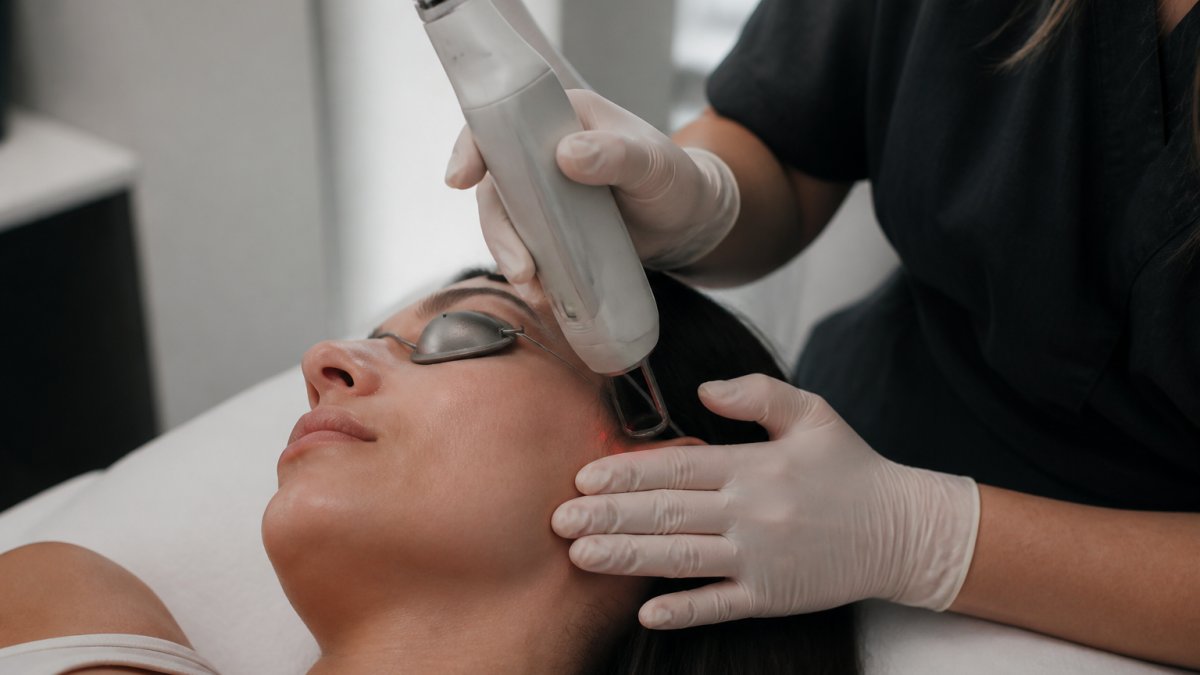
Laser skin renewal is a controlled resurfacing treatment that uses focused light energy to remove damaged surface layers and trigger fresh collagen production beneath the skin.
How Laser Skin Renewal Works on Scar Tissue
Acne scars form when inflammation damages the skin's supporting structure and collagen heals unevenly, leaving dips, raised tissue or discolouration. Laser skin renewal targets that damaged architecture directly: the beam removes a precise layer of surface skin and delivers heat into the dermis, prompting a wound-healing response that builds new collagen and smooths the surface over the following months.
Controlled Thermal Injury and Collagen Remodelling
The mechanism is deliberate, controlled injury. By damaging scar tissue in a measured way, the laser forces the skin to rebuild with better-organised collagen, a process called collagen remodelling. Fractional devices treat the skin in tiny columns, leaving surrounding healthy tissue intact so healing is faster than full-field resurfacing. This is why results build gradually across a treatment course rather than appearing overnight.
Ablative vs Non-Ablative and Fractional Lasers Compared
Ablative lasers remove the top layer of skin outright and deliver the strongest results for pronounced texture, at the cost of more downtime. Non-ablative lasers leave the surface intact and heat the dermis beneath, offering milder improvement with far less recovery (pubmed.ncbi.nlm.nih.gov). Fractional versions of either type treat only a fraction of the skin at once, balancing effectiveness against healing time.
| Laser type | What it does | Downtime | Best for |
|---|---|---|---|
| Ablative (CO2, Er:YAG) | Removes surface layers | Longer, often a week or more | Deep pitted scars, severe texture |
| Non-ablative | Heats dermis, spares surface | Minimal to a few days | Mild scarring, tone, early laxity |
| Fractional | Treats columns of skin | Moderate | Most scarring types, balanced risk |
CO2 and Er:YAG Resurfacing
CO2 and Er:YAG are the classic ablative options. They are powerful and well suited to significant pitted scarring, but they carry a higher risk of pigmentation changes, particularly on darker skin tones, and demand strict aftercare. We reserve them for candidates whose skin type and scarring pattern genuinely justify the recovery.
Fraxel and Halo-Style Fractional Devices
Fraxel and Halo-style fractional lasers sit in the middle ground, delivering meaningful texture improvement with a more manageable recovery. They are a common recommendation for people who want visible change without stepping away from work for an extended period.
Laser Treatment for Pitted Acne Scars: Results by Scar Type
Results vary sharply by scar type, and any clinic that promises the same outcome for every scar is overselling. Rolling and boxcar scars generally respond well to fractional resurfacing because the laser can rebuild the depressed tissue. Ice-pick scars are narrower and deeper, so they often need a combination approach. Raised scars respond differently again. You can view before and after results to see outcomes by scar type.
- Rolling scars: good response to fractional and ablative resurfacing
- Boxcar scars: moderate to good improvement with collagen remodelling
- Ice-pick scars: partial response, often combined with other techniques
- Post-inflammatory hyperpigmentation: responds well to non-ablative settings
Laser Resurfacing Recovery Time and Aftercare
Recovery depends entirely on the laser used. Non-ablative fractional treatments typically leave redness and mild swelling for a few days, and most people return to normal activity quickly.
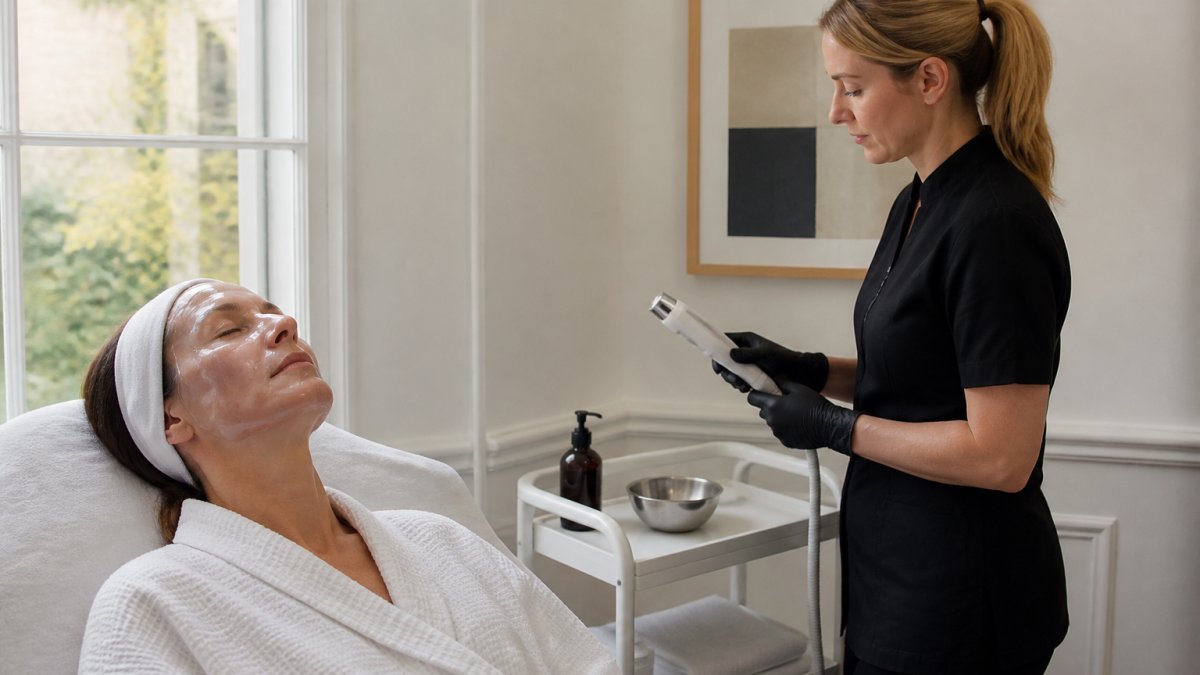
Aftercare decides a large part of the outcome. Sun protection is non-negotiable, because fresh skin is highly vulnerable to pigmentation. For a broader look at downtime for non surgical procedures, that guide covers what to plan around.
Laser Treatment vs Microneedling for Acne Scars
Most guides frame this as a two-horse race. In practice, the decision is rarely laser or microneedling, it is which modality, at what depth, in what sequence, and for which scar type. A systematic comparison is more useful than a head-to-head verdict.
How the two mechanisms differ
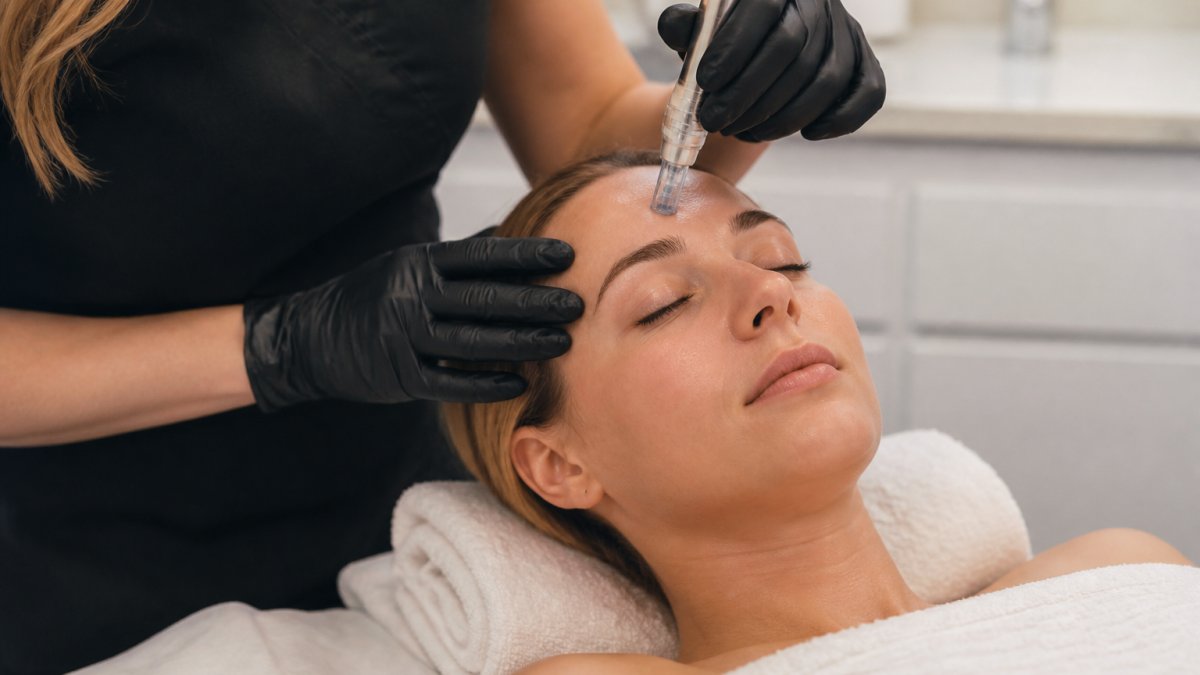
Both treatments stimulate collagen, but they do so differently. Lasers deliver controlled thermal energy, ablative devices remove the epidermis outright, while non-ablative and fractional devices heat the dermis through intact or partially intact surface skin. Microneedling creates mechanical micro-wounds with fine needles, triggering a wound-healing cascade without heat. That distinction matters: thermal injury drives a stronger collagen response but carries a higher risk of post-inflammatory hyperpigmentation (PIH), particularly in darker skin tones (Fitzpatrick IV-VI). Microneedling avoids heat entirely, which is why it is often the safer first-line option for deeper skin tones, though its collagen stimulus is generally milder.
Matching the modality to the scar
| Scar type | Laser | Microneedling | Preferred approach |
|---|---|---|---|
| Rolling scars | Good, especially fractional | Moderate | Fractional laser or RF microneedling; subcision if tethered |
| Boxcar scars | Good | Moderate | Fractional ablative or non-ablative laser |
| Ice-pick scars | Partial | Limited | Often combination: TCA CROSS or punch elevation plus laser |
| Post-inflammatory hyperpigmentation | Good with non-ablative settings | Good | Non-ablative laser or microneedling; peels as adjunct |
| Mixed scarring | Good | Good | Staged combination plan |
A common pattern is that rolling and boxcar scars respond best to fractional resurfacing, while ice-pick scars need a focal technique before or alongside resurfacing. Microneedling performs well for mild textural scarring and maintenance but rarely delivers the same depth of remodelling as ablative fractional laser for pronounced pitting.
Book your consultation today →
Downtime, sessions and realistic timelines
- Non-ablative fractional laser: typically 3-5 sessions spaced 4-6 weeks apart; redness for 2-5 days; collagen continues to build for 3-6 months after the course.
- Ablative fractional laser (CO2, Er:YAG): often 1-3 sessions spaced 3-6 months apart; 7-14 days of visible healing; meaningful remodelling over 6-12 months.
- Microneedling: commonly 4-6 sessions spaced 4-6 weeks apart; 24-72 hours of redness; gradual improvement over 3-6 months.
Most practitioners find that a course, not a single session, is where realistic improvement lies. Expect visible change rather than scar elimination; a qualified improvement range is typically described in terms of percentage smoothing rather than complete removal, and deeper scars often retain some visible contour.
Where each sits against the wider menu
Laser and microneedling are not the only options, and the strongest plans often combine them with other approaches:
- Chemical peels: useful for pigmentation and superficial tone; limited effect on scar depth. Often used between laser sessions.
- Subcision: mechanically releases tethered rolling scars; frequently combined with laser or microneedling for better contour correction.
- Fillers: temporary volume correction for depressed scars; not a remodelling treatment and requires maintenance.
- TCA CROSS: focal chemical reconstruction for ice-pick scars; often paired with resurfacing.
Microneedling outcomes can vary. For clinical detail on how effective microneedling is for aging, that guide reviews the evidence. A qualified professional can discuss whether it is suitable for you.
Acne Scar Treatment Options: Where Laser Fits
Laser is one option among several, and the right choice depends on scar type, skin tone and how much downtime you can accept. A realistic comparison helps set expectations before you commit.
| Option | Best for | Downtime | Notes |
|---|---|---|---|
| Fractional laser | Most scarring, texture | Moderate | Strong collagen response |
| Ablative laser | Deep pitted scars | Longer | Higher pigmentation risk |
| Microneedling | Mild scarring, maintenance | Minimal | Gradual improvement |
| Chemical peels | Pigmentation, tone | Short | Limited effect on depth |
| Subcision | Tethered rolling scars | Short | Often combined with laser |
Different treatment options may be considered for texture and tone concerns.
Safety, Skin Tone and Who Laser Suits
Laser is safe when it is matched to the right candidate, and that match is where most problems begin. A blanket warning about "darker skin" is not enough; risk depends on Fitzpatrick type, active disease, medication history and the specific device and settings used.
Skin tone and post-inflammatory hyperpigmentation risk
Post-inflammatory hyperpigmentation (PIH) is the most common complication of laser resurfacing in darker skin tones (Fitzpatrick IV-VI) (pubmed.ncbi.nlm.nih.gov). The risk is not uniform: it depends on the laser wavelength, pulse duration, fluence and whether the epidermis is cooled during treatment. Non-ablative and fractional devices with longer wavelengths and adequate epidermal cooling carry lower risk than fully ablative resurfacing. A common pattern is that practitioners prime darker skin with topical retinoids or hydroquinone for 2-4 weeks before treatment and perform a small test patch first. If you have a history of PIH after injury or previous treatments, that history should be discussed explicitly before any device is selected.
Active acne, medications and medical history
- Active acne: treating over active inflammation increases infection and scarring risk. Most practitioners defer resurfacing until active breakouts are controlled.
- Isotretinoin history: traditional guidance advised waiting 6-12 months after finishing isotretinoin before ablative resurfacing, though evidence for this is limited and practice varies; a clinician will assess individually.
- Keloid or hypertrophic scarring history: raises the risk of abnormal healing; may steer the recommendation toward non-ablative options or away from laser altogether.
- Photosensitising medications: some antibiotics, retinoids and herbal supplements increase photosensitivity; these need review before treatment.
- Pregnancy and breastfeeding: generally a contraindication for elective laser resurfacing.
- Autoimmune and connective tissue conditions: require individual assessment, as healing may be impaired.
What the evidence supports, and where it is limited
Clinical evidence supports fractional laser resurfacing for improving acne scar appearance, with the strongest data for ablative fractional CO2 and Er:YAG devices in moderate to severe scarring. However, the evidence has limitations worth knowing: studies often use subjective grading scales, follow-up periods are frequently short (3-6 months), and few trials compare laser directly against microneedling or combination approaches. That means marketing claims of "dramatic" or "complete" scar removal should be treated with caution. Realistic expectations are improvement in texture and contour, not scar elimination, and outcomes vary with scar type, skin tone and aftercare compliance.
A qualified professional can assess whether laser suits your skin. If you are unsure, book a professional aesthetic consultation.
Frequently Asked Questions
Can laser treatment make acne scars worse?
Laser treatment can have risks, and suitability depends on the individual. Discuss potential risks and expectations with a qualified professional.
Which types of acne scars respond best to laser treatment for pitted acne scars?
How acne scars respond to treatment varies by scar type and individual. A qualified professional can assess suitability and discuss options.
How does laser treatment vs microneedling for acne scars compare?
Microneedling and laser treatment are different approaches. Suitability and potential risks vary by individual; discuss options with a qualified professional.
How many sessions are needed, and what does laser resurfacing recovery time look like?
The number of sessions, recovery and results vary by treatment and individual. A qualified professional can discuss these at consultation.
What are the disadvantages of laser on the face?
Laser treatment may involve downtime and risks, and it may not suit everyone. Discuss suitability, potential side effects and aftercare with a qualified professional.
Acne scarring is stubborn, and the wrong treatment wastes both money and recovery time. At Exclusive Medical Aesthetics, we match the device to your scar type and skin tone through personalised, evidence-based assessment, so results look natural rather than overdone. Get started with Exclusive Medical Aesthetics and book your consultation today to find out which approach genuinely suits your skin.